
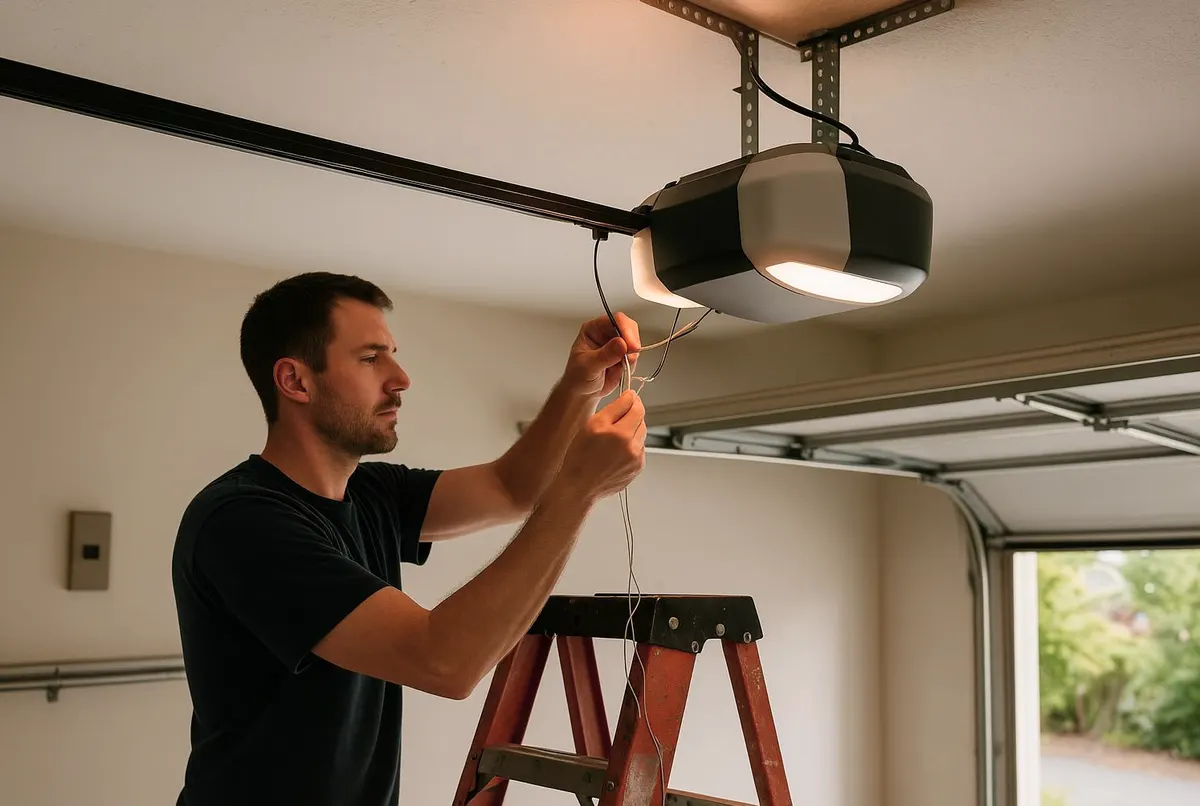
The Moment You Notice Something's Wrong
It usually starts small. You hit the remote and the door hesitates before it moves, or the motor groans like it's working harder than it used to. Maybe the light doesn't come on anymore, or the door reverses halfway up for no reason you can find. You stand there in the garage, keys in hand, wondering if this is a quick fix or the beginning of a bigger bill. That moment is worth pausing on, because the decision you make next can cost you a little or a lot depending on which way you go.
What Repair Usually Involves
Most opener problems fall into a handful of categories: worn drive gears, a failing logic board, a dying capacitor, misaligned safety sensors, or a remote that's lost its connection to the unit. A technician can often diagnose and fix these issues in a single visit, and repair costs for openers typically run in the range of $100 to $300 depending on the part. If the opener is less than seven or eight years old and the motor itself still runs strong, repair is usually the right call. You keep a working system without the cost of a full install.
Where Repair Falls Short
- Parts for older chain-drive and screw-drive units can be harder to source as manufacturers phase out models.
- A board replacement on an aging unit sometimes costs nearly as much as upgrading to a new opener with better safety and connectivity features.
- If the motor itself is the problem rather than a sensor or board, repair costs climb fast and the math starts favoring replacement.
What Replacement Usually Involves
A new opener install typically runs $300 to $600 for the unit and labor combined, depending on horsepower, drive type, and whether you want smartphone connectivity. You get a quieter motor, modern safety sensors, rolling code security, and a warranty that resets the clock on reliability. For homes with an attached garage near a bedroom or living space, a belt-drive opener is often worth the extra cost up front because of how much quieter it runs.
Where Replacement Falls Short
- Higher upfront cost compared to a single repair visit.
- Unnecessary if the existing motor is young and the failure is a simple, isolated part.
- Smart features add convenience but aren't essential for every household.
The Five-Year Math
Here's where the decision usually gets made. If you repair an opener that's already eight-plus years old, you're often looking at another repair within two or three years as other components start to fail from the same wear and heat exposure. Two repairs at $150 to $250 each can add up to more than the cost of a new unit, and you still end up replacing it eventually. On the other hand, if the opener is only three or four years old and the fix is a $120 sensor realignment or remote reprogram, repairing clearly wins over the next five years with no reasonable scenario where replacement comes out ahead.
The break-even point tends to sit around the seven-to-nine-year mark for most residential openers. Past that, repair becomes a short-term patch rather than a long-term fix, and replacement starts to look like the cheaper decision once you account for a second visit down the road.
Why Local Conditions Tip the Scale
Garages in this part of Alabama take a beating that garages in drier climates don't. Summer humidity and heat put real stress on opener circuit boards and capacitors, especially in an unconditioned garage where temperatures climb well past what the electronics are rated to handle comfortably. Afternoon downpours during storm season also mean power fluctuations and the occasional surge, which shortens the life of logic boards faster than steady, dry-climate power ever would. Doors and openers built to handle wind-load requirements for hurricane season put extra demand on the motor too, since heavier, reinforced doors ask more of aging components.
If your opener is already showing its age and you've had more than one weather-related power blip this year, that's a point in favor of replacing rather than repairing. A newer unit with surge protection built in, or paired with a basic surge protector at the outlet, holds up better through the kind of storm season that's common here.
A Reasonable Recommendation for Typical Homes Here
For most homes in this area, the practical rule is: repair if the opener is under seven years old and the failure is a single, identifiable part. Replace if the opener is pushing eight-plus years, if you've already had one repair in the past two years, or if the motor itself is struggling rather than just a sensor or remote. Given the humidity and storm exposure typical of this region, leaning toward replacement a year or two earlier than you might in a milder climate isn't overly cautious, it's just accounting for how hard these components work here.
When to Call Southside Garage Door
If you're standing in your garage right now trying to figure out which category your opener falls into, that's exactly the kind of call worth making before you guess. Southside Garage Door can diagnose the actual failure point, whether it's a board, a sensor, or the motor itself, and give you a straight answer on whether Garage Door Opener Repair or a full Garage Door Opener Installation makes more sense for your specific unit and its age. We'll also check the door itself while we're there, since an opener working overtime is sometimes a symptom of springs or rollers that need attention too.
If your opener is acting up, don't wait for it to fail completely during a storm. Call Southside Garage Door today and get a straight answer on repair versus replacement for your home in Southside, AL.