
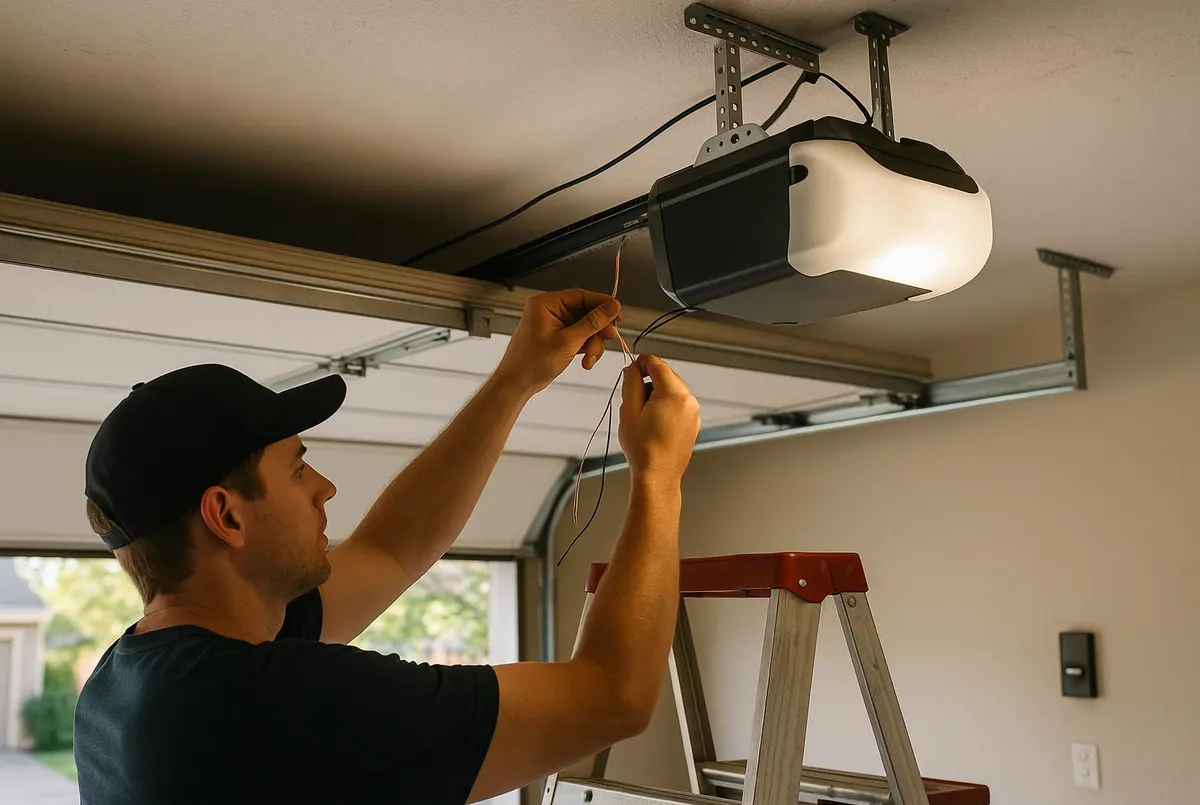
The Argument Usually Starts With a Noise
One of you hears a groan every time the door opens and says, "That's it, we need a new one." The other says, "It's fine, it's always done that." Meanwhile, the door keeps aging another season, another hurricane season of humidity swings, another few months of afternoon downpours soaking into hardware that was never sealed quite right. Here's the real cost of waiting it out: a door that's quietly past its prime doesn't fail gracefully. It fails when a spring finally gives out under tension, or when the opener motor burns up trying to lift a door that's no longer balanced. Both of those are emergency calls, not scheduled maintenance. So before this turns into another round of "I told you so," here's what actually determines how long a garage door and its opener last.
The Honest Lifespan Numbers
These are ranges, not guarantees, because so much depends on use and upkeep:
- Garage door (the physical door itself): 15 to 30 years, depending on material, how often it's used, and how well it's maintained.
- Garage door opener (the motor unit): 10 to 15 years, sometimes less if it's been doing more work than it should.
- Springs: rated for roughly 10,000 cycles, which works out to 7 to 12 years for an average household, far less if the door is unbalanced or oversized for the spring.
Notice the opener and the springs usually wear out before the door itself does. That's an important point for the argument you're having — "the door" and "the garage door system" are not the same lifespan question.
What Shortens That Lifespan
Some of this is just normal wear. But in this part of Alabama, a few local factors speed things up if they're ignored:
- Humidity and moisture. Hot, humid air plus afternoon downpours means wood panels swell and shrink, hinges and tracks pick up rust, and weatherstripping degrades faster than it would in a drier climate. Rust on rollers or hinges adds friction, which makes the opener work harder than it was built for.
- Wind-load stress. Doors here need to handle real storm pressure during hurricane season. A door that isn't properly braced or rated for local wind-load requirements takes more structural stress with every storm, which shortens the life of the panels and the track alignment.
- An out-of-balance door. This is the single biggest hidden cause of early opener failure. If the springs are even slightly off, the opener compensates by pulling harder every single cycle. That's like driving everywhere in first gear — the motor burns out years early.
- Skipped lubrication. Rollers, hinges, and springs that run dry grind against metal, wearing down faster and straining the opener.
- DIY spring adjustments. Springs are under extreme tension and sized specifically for your door's weight. A spring that's the wrong tension — common with mismatched replacements — ages the whole system faster and is genuinely dangerous to adjust yourself.
What Actually Extends It
None of this is complicated, but it has to happen on a schedule, not "whenever we remember":
- Lubricate moving parts — rollers, hinges, springs — roughly twice a year. In this climate, once before summer humidity peaks and once before winter is a reasonable rhythm.
- Check the balance by disconnecting the opener and lifting the door halfway by hand. It should stay put. If it drifts up or crashes down, the springs are off and the opener is compensating every time it runs.
- Inspect weatherstripping and seals for cracking or gaps, since moisture getting into the garage accelerates rust on everything inside, including the door hardware.
- Tighten hardware — brackets, hinges, track bolts — since vibration from regular use loosens them over time, and a loose track puts uneven stress on rollers and opener alike.
- Don't ignore small opener symptoms. Grinding, delayed response, or the door reversing for no reason are early warnings, not just quirks to live with.
Signs You're on Borrowed Time
If any of these are happening now, the lifespan clock is running out faster than the average numbers above suggest:
- Visible rust on springs, tracks, or hinges
- The door feels heavy or slow, even right after the opener runs
- Panels that are warped, swollen, or don't sit flush anymore
- The opener runs louder or longer than it used to
- Gaps at the bottom or sides letting in light or water
When to Call Southside Garage Door
If you're not sure whether your door is aging normally or heading toward a breakdown, that's exactly what a maintenance visit is for. Southside Garage Door can check spring tension, door balance, track alignment, and opener wear, and tell you honestly whether you're looking at a simple fix or a system that's genuinely at the end of its life. If it's springs that are worn or mismatched, Spring Replacement done correctly — with the right tension for your specific door — resets that part of the clock properly instead of papering over the problem. And if the whole system is past its reasonable lifespan, an honest conversation about replacement now is a lot cheaper than an emergency call during the next storm.
If you're trying to settle this debate at home, let us settle it for real. Call Southside Garage Door for a straight answer and the right next step for your door, wherever you are in Southside, AL and the surrounding area.